
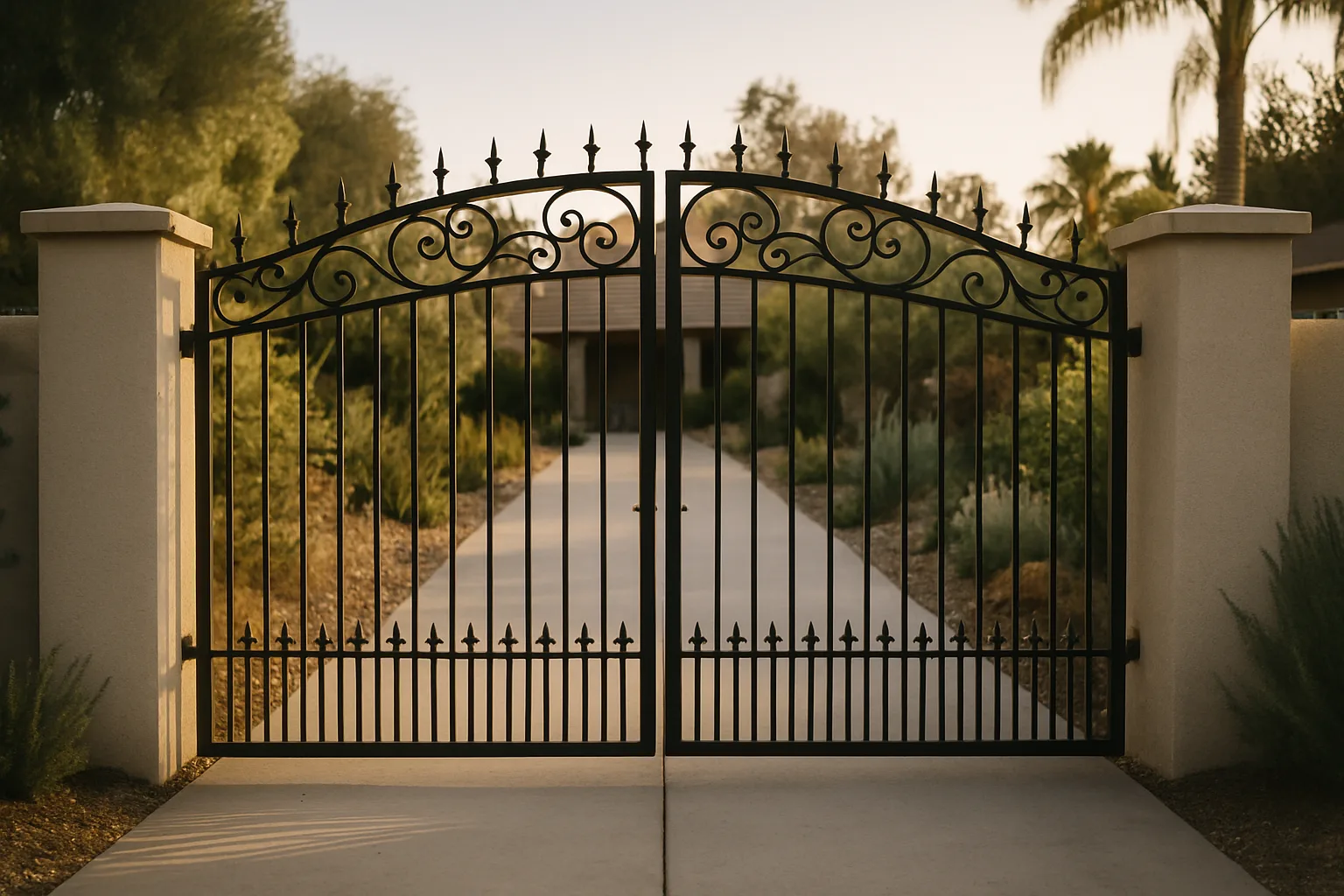
Gate Installation in Los Angeles, CA
New driveway gates installed on properties across LA. A written site assessment documents every spec before fabrication begins.
Call us today · 844-997-7555
Get Your Free Estimate Today
We follow up the same business day.
Request received
We'll follow up shortly. Need it sooner? Call 844-997-7555.
Residential and Commercial Gate Systems, Built to a Documented Standard
We fabricate and install residential and commercial gate systems across Los Angeles County, built to a documented standard from the first measurement to final calibration.
From compact urban parcels in Mid-City to older homes on the Eastside, our field crews route out of our Wilshire Blvd office for faster scheduling and precise, site-specific work.
- Iron & Steel
- Aluminum & Wood
- Swing & Slide
What Gate Installation in Los Angeles Actually Covers
Gate installation means the right gate type, the right material, and calibrated hardware, not just a panel in your driveway.
A new gate installation in Los Angeles is more involved than it looks from the street. You're choosing a gate type, swing or slide. You're choosing a material, iron, steel, aluminum, or wood. And you're deciding how much automation, access control, and security your property needs.
Iron Men Gates and Doors Design handles all of it. We fabricate and install residential and commercial gate systems across Los Angeles County. Every job starts with a written site assessment, a pre-installation inspection of the opening width, grade, existing posts or columns, and electrical access, before a single piece of material is ordered.
That's the standard we hold on every project, from the Westside to the SGV corridor.
Why Gate Installation in Los Angeles Looks Different Here
Los Angeles properties present site conditions you won't find in most other cities.
The lot configurations across LA County are genuinely varied. Properties along the 10 freeway corridor through Mid-City tend to sit on compact urban parcels with poured-concrete driveways and existing block or brick columns that weren't built to gate-installer specs. Further east toward the Eastside, older homes often have soil conditions, clay-heavy fill near the LA River basin, that affect post anchoring depth requirements.
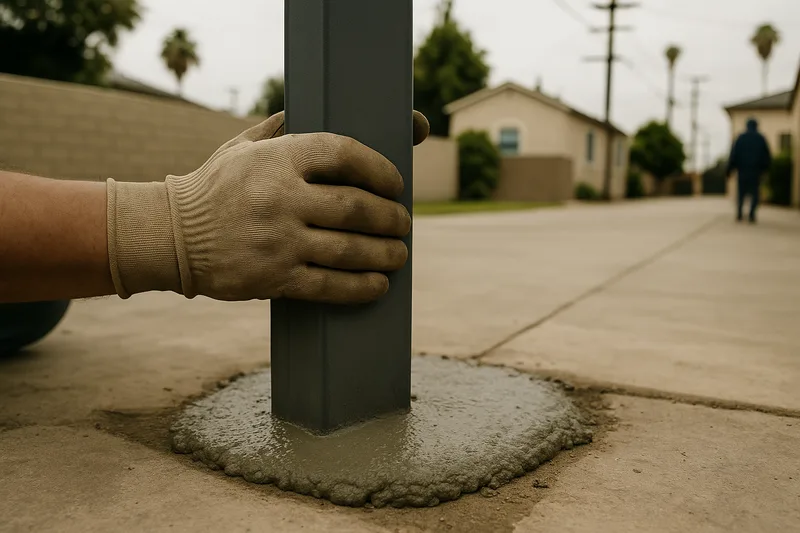
Post anchoring is the method of securing gate posts into concrete footings, and depth matters. A gate that weighs 400 lbs needs footings that go deeper than one that weighs 150 lbs. That calculation changes based on your soil's bearing capacity, not just the gate's listed weight.
We route field crews out of our Wilshire Blvd office. That means faster scheduling across Mid-City, Hollywood, the Eastside, and the South Bay. Los Angeles traffic is part of the job, we account for it in the schedule.
How a Gate Installation Actually Plays Out
Every gate installation reveals at least one site condition the homeowner didn't know was there.
I walked a property in Mid-City a couple years back. The homeowner wanted a double swing gate across a 14-foot driveway opening. Standard enough request.
When I did the site assessment, I measured the opening correctly, 14 feet 3 inches, not an even 14. That three inches matters when you're fabricating panels. The existing columns were decorative CMU block, not structural. They looked solid from the street, but they weren't anchored deep enough to carry a gate with two full-size panels swinging on them.
Here's what matters about existing columns: they're often built for appearance, not load-bearing function. We documented the column condition and built new steel posts set in concrete footings alongside the existing block, so the block stayed for aesthetics and the posts did the actual work.
We also caught that the opening's left side ran about a half-inch low across the grade. A swing gate with standard clearance would have dragged within the first season. We adjusted the hinge height on the left panel before fabrication to account for it.
The gate that went in fit perfectly. Not because the site was perfect, it wasn't, but because we measured what was actually there before we built anything.
Hardware calibration, the final adjustment of hinges, latches, stops, and opener limits, took less than 20 minutes at the end because the fabrication was already dialed in. That's the order of operations that makes a gate installation work.
Choosing the Right Gate Material for Your Property
Material selection affects how long your gate lasts, how it looks, and how much maintenance it needs. Iron Men installs gates in iron, steel, aluminum, and wood. Here's how those options compare in plain terms.
Iron Gates
Ornamental iron or wrought iron are dense, heavy, and extremely durable. Gate gauge (the thickness of the steel or iron used in construction, where lower gauge numbers mean thicker material) matters most with iron. A 14-gauge iron panel holds up far longer than an 18-gauge equivalent under daily cycle use. Iron requires periodic anti-rust treatment in coastal or high-humidity zones but handles LA's dry inland heat without warping.
Steel Gates
Including tubular steel frames, steel offers strength similar to iron at a lower weight for comparable gauge. Good for larger openings where the automation motor load matters.
Aluminum Gates
Aluminum gates are lighter still and naturally corrosion-resistant. They won't rust. Useful for properties near the coast, Santa Monica to Long Beach, where salt air accelerates rust on untreated iron.
Wood Gates
Wood gates add warmth and privacy. Cedar holds up well in Southern California's climate. Solid wood panels are heavier than they look, so post anchoring and hinge sizing need to account for that weight from the start.
A driveway gate, the gate positioned at your vehicle entry point, distinct from a pedestrian or side-yard gate, carries different weight and cycle demands than an interior gate. That shapes the material recommendation every time.
What Our Installation Standards Look Like
Every new gate installation follows a documented standard, no shortcuts on materials, anchoring, or calibration.
- Site assessment first: Opening width, grade, post condition, and electrical access documented in writing before fabrication begins.
- Gate gauge verified: Material thickness confirmed against the design spec, what was quoted is what gets installed.
- Post anchoring to load: Footing depth and diameter calculated based on gate weight and local soil bearing, not a default depth.
- Welded joints, not screws: Structural connections are welded, not fastened with hardware that backs out over time.
- Hardware calibration at finish: Hinges, latches, stops, and opener limits adjusted before crew departs, gate must complete a full-cycle test.
- Licensed work: California Contractor License #1049550 covers all residential and commercial gate installation work in Los Angeles.
- Material selection documented: Gate material, iron, steel, aluminum, or wood, confirmed in writing as part of the production order.
From Assessment to Calibrated Finish
A gate installation at Iron Men follows three defined stages, nothing gets skipped.
Site Diagnostics
The site assessment happens before anything is priced or fabricated. We measure the opening, actual dimensions, not assumed. We check the grade across the full swing or slide path. We inspect existing posts or columns for structural integrity. We confirm electrical access if automation is part of the project.
This is also where gate material selection gets confirmed. The choice between iron, steel, aluminum, or wood is based on what we observe at the site, weight load requirements, corrosion exposure from the local environment, and your style preference, not what was discussed over the phone.
Fabrication and Installation
Fabrication follows the written assessment. Panels are cut and welded to the documented spec. Gate gauge is verified before welding begins. Posts are set in concrete footings at the calculated depth. Frame assembly happens at our fabrication facility. Installation is sequenced: posts cure, then panels go on, then hardware mounts.
For swing gate installations, hinge placement accounts for grade variations across the opening. For sliding gate installations, track alignment is set before the panel is hung so the roller travel is true from the first cycle.
Testing and Hardware Calibration
Hardware calibration is the final step, and it's never skipped. Hinges get final torque. Latches are set to engage cleanly under normal push force. If an opener is part of the project, travel limits are programmed and safety sensor alignment is verified. The gate runs a minimum of 10 full open-close cycles before the crew signs off.
You get a gate that works the day it's installed, not one that needs a service call three months later.
Areas We Serve in Los Angeles
Iron Men handles gate installation across Los Angeles County, from the Westside to the Eastside and points south.
We serve residential and commercial properties throughout Los Angeles, including these neighborhoods and cities:
- Mid-City
- Hollywood
- West Hollywood
- Silver Lake
- Echo Park
- Koreatown
- Culver City
- Inglewood
- Compton
- Long Beach
- Torrance
- South Bay
- San Fernando Valley
- Pasadena
- SGV Corridor
Frequently Asked Questions
Ready to Get Started?
A new gate installation in Los Angeles starts with a real site visit and a written assessment before any quote is issued. Tell us your opening width and material preference and we'll come out and document the rest.
Book your site assessment
We follow up the same business day.
By submitting you agree to be contacted about your project. We never share your details.
Request received
We'll follow up shortly. Need it sooner? Call 844-997-7555.
Iron Men Gates and Doors Design|5520 Wilshire Blvd Unit 323, Los Angeles, CA 90036|CA License #1049550|844-997-7555