
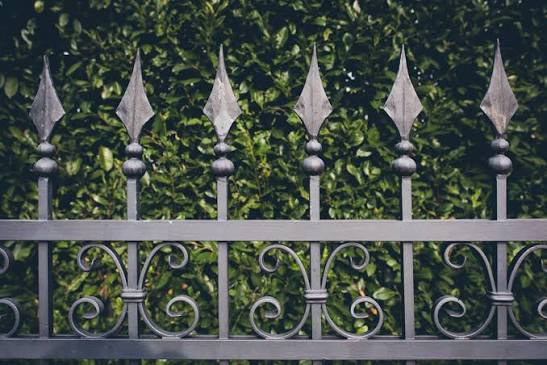
Ornamental Iron Fencing in Los Angeles, CA
A decorative iron fence that looks right at the scale of your property.
Powder coat color selected using a physical sample against your home's exterior finish. Scroll density and finial proportion set from the actual viewing distance on site.
Get Your Free Estimate Today
We follow up the same business day.
Request received
We'll follow up shortly. Need it sooner? Call 844-997-7555.
Ornamental Iron Fencing Built for Los Angeles Properties
Ornamental iron done right starts with the scale of the property, not a catalog page.
The same design does not work on three different frontages. Here's how the answer changes.
Large frontage, read from the street
Close-spaced, small-pattern scrolls disappear at distance on a 90-foot run. They compete with the architecture instead of framing it.
Tall panels, open scroll work, breathing room, fewer elements, heavier iron
The fence should stay out of the way
A different problem entirely. The eye should go to the house, not the boundary line.
Flat-top, minimal scroll work, satin finish, low-profile ball finials
Grade adds a third layer
A fence that rakes continuously on a sloped lot looks unfinished wherever the design has structural logic. There is no catalog answer for a 14-percent grade.
Panel stepping, so the top rail holds a horizontal line across the grade
What a Site Walk Reveals Before Any Design Is Drawn
I don't start a design until I've walked the property line myself.
I've been installing custom ornamental iron in Los Angeles since 2014, and I've seen the same outcome repeated: a homeowner approves a design from drawings, the crew installs the fence, and on reveal day something looks off. The scroll pattern feels too busy. The finials look undersized against the entry columns. The panel height doesn't align with the wall cap running beside it. Every one of those outcomes is preventable with a site walk.
Fine detail reads clearly. A tight, intricate scroll pattern looks considered and proportional at this range.
That same pattern disappears. The detail collapses into visual noise and competes with the facade behind it.
A scroll element visible and proportional at 20 feet reads completely differently at 60 feet. Scroll weight gets selected after measuring the actual viewing distance on site, not from a catalog.
When I walk a property before the design phase, I'm looking at four things simultaneously.
After that walk, I know what scroll density will read correctly, what finial style fits the architectural period, whether panel stepping is needed, and which powder coat colors will hold visual weight against the exterior stone or stucco. That's when the design gets drawn. Not before.

Three Coats. Not Two.
Coastal and inland properties need more protection than a single finish layer provides.
Bonded directly to prepared bare metal. This is the corrosion barrier.
The middle layer, which carries adhesion between the primer and the finish.
Gloss black, satin black, bronze, or a custom RAL color. The only layer you see.
Powder Coat Color Is Confirmed Against Your Actual Exterior
The right color can only be confirmed in physical light, against your property.
Gloss black on a monitor looks identical to satin black. Bronze reads warmer or cooler depending on the monitor's white balance. Neither tells you how that color sits next to your entry gate, your stucco, or your stone veneer in late-afternoon Los Angeles light.
We bring physical powder coat samples to the site and hold them against your exterior finish in natural light before any finish is ordered. That's the only way to confirm whether gloss or satin black reads correctly, whether a classic bronze matches your hardware, or whether a custom RAL color is worth specifying.
It adds one step to the process. It eliminates a very expensive regret.
Design Elements We Work With
Every ornamental iron fence is built from a set of specific components, each one a design decision.
Scroll work
Decorative curved iron elements added to fence panels. Size and density affect visual weight from street level. Must be proportioned to panel height, not selected independently.
Finial
The decorative cap applied to the top of each picket or post. Spear, ball, fleur-de-lis, or custom shapes matched to architectural period.
Panel stepping
Adjusting panel heights on sloped grade so the top rail holds horizontal in increments. Required when the design has a visible horizontal logic.
Powder coat color
The final decorative and protective layer. Gloss black, satin black, bronze, and custom RAL colors. Confirmed with a physical sample on site.
Ornamental iron panel
A fabricated fence section where decorative elements, scrolls, finials and twisted pickets, serve as both structural and visual components.
Custom fabrication
Manufacturing components to non-standard dimensions so the fencing matches existing gates, walls, or architectural details already on the property.
From Consultation to Installation
A clear, sequential path from first call to final inspection.
Site diagnostics
We schedule a site walk at your property. We measure the frontage run, document the grade, photograph the existing gate line and any adjacent walls or pillars, and identify attachment constraints. This visit takes 30 to 45 minutes and drives the entire design.
Design and fabrication
Based on the site walk, we prepare panel drawings with scroll scale, finial style, picket spacing, and panel height annotated. You review the drawings before any iron is cut.
Once approved, custom fabrication begins at our workshop. Standard lead time runs two to four weeks depending on design complexity. Standard post-set installation for a typical residential frontage takes one to two days.
Post-installation walkthrough
We walk the completed fence with you and confirm that panel stepping is visually correct across the grade, that all welds are ground smooth, and that powder coat coverage is consistent across every panel and post. Any touch-up coating required at weld points or post-set locations is applied before we close the job.
Frequently Asked Questions
Serving Greater Los Angeles from the Westside to the Foothills
Our crews reach Westside neighborhoods and communities along the 10 and 101 corridors. In high-value zip codes, fence scale and finish quality show up in how a property photographs and how buyers read the frontage before they walk through the gate. Call 844-997-7555 to confirm availability for your area.
- Brentwood
- Santa Monica
- Culver City
- Silver Lake
- Los Feliz
- Hancock Park
- San Marino
- Pasadena
- Calabasas
- Hollywood Hills
Related Iron and Fencing Work
Ornamental Iron Works Best When the Design Is Built Around the Property
We'll review your frontage, your grade, and your existing gate line before a single design element is selected.
That's how a fence gets built to last, and look right, for the long term.
Schedule Your Site Walk
30 to 45 minutes, and it drives the entire design.
Serving greater Los Angeles since 2014.
Request received
We'll be in touch to schedule your site walk.
Iron Men Gates and Doors Design · Los Angeles, CA
844-997-7555 · [email protected] · Serving Greater Los Angeles since 2014