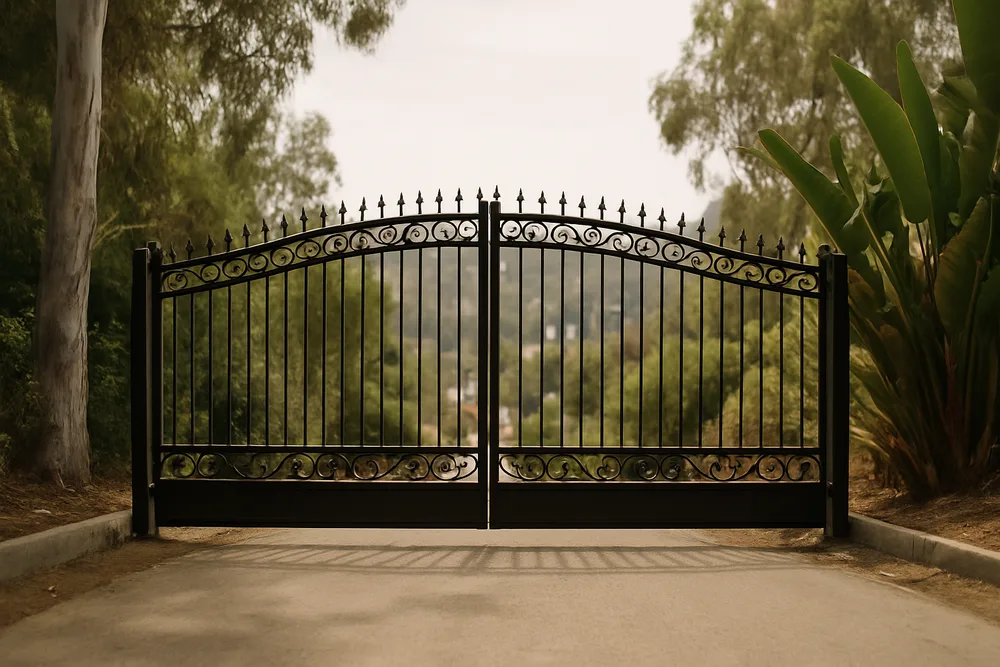
A homeowner in Mount Washington wanted a dual-arm configuration, two panels, each driven by its own motor arm, on a steep driveway entry. The gate opening was about 14 feet wide. Something felt off to him about a previous site visit: nobody had measured the slope. He called Iron Men.
When Yaron walked the entry, he pulled out the grade tool before examining anything else. The threshold dropped about 8% from left post to right post, not dramatic to the eye, but enough to matter when calculating ground clearance across a 7-foot panel arc.
On a flat-surface default bracket setting, the inside corner of the left panel would have contacted the driveway surface at about 45 degrees of travel, right around where a vehicle hood sits. The gate would have scratched every car that didn't stop far enough back, and the hinge arm would have warped within 18 months from repeated resistance.
The pivot point height on the left post was adjusted by 2 inches and the arm bracket angle repositioned by about 12 degrees. The gate opens to full extension, clears a standard SUV hood with room to spare, and sits level at close. The homeowner has been using it daily for over a year without a single adjustment call.
That's the difference a grade measurement makes. Sloped entries account for more swing gate problems than any other single factor in hillside Los Angeles installations.